
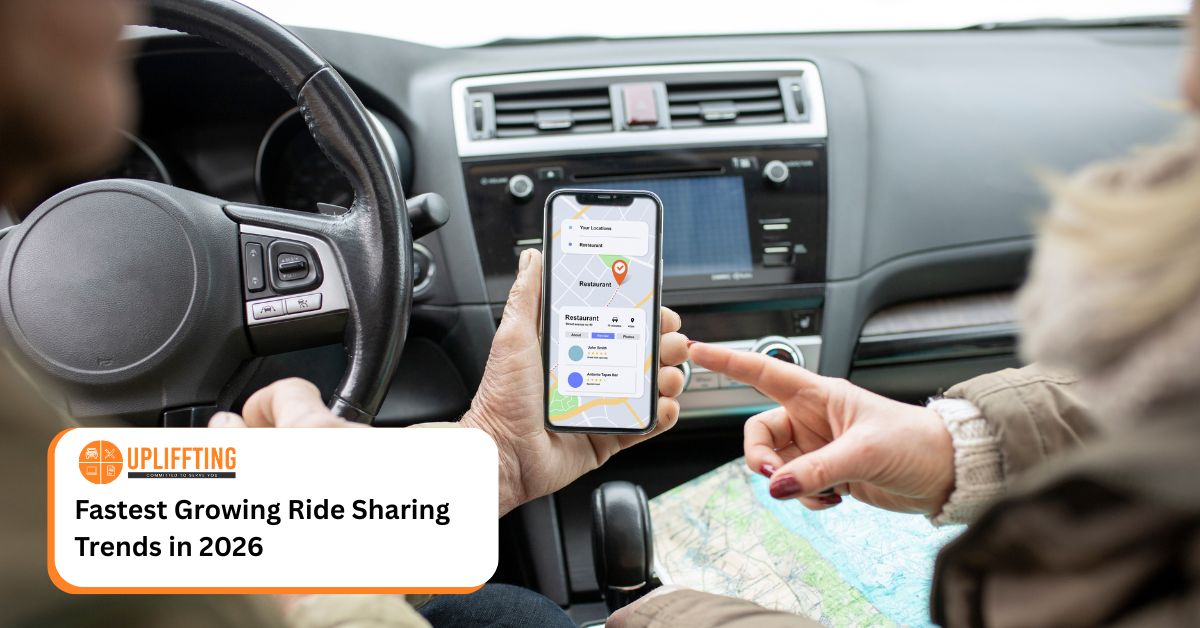
Ride sharing has become one of the most important parts of modern transportation. People now prefer booking rides through mobile apps because it saves time, reduces travel stress, and offers affordable travel options. In 2026, the ride sharing industry is growing faster than ever due to new technologies, customer demands, electric vehicles, and smart transportation systems.
Many companies are improving their services by adding safer rides, eco-friendly vehicles, AI-based pricing systems, and better customer experiences. From daily office travel to long-distance rides, ride sharing platforms are changing how people move from one place to another.
This article explains the fastest growing ride sharing trends in 2026 and how these changes are shaping the future of transportation worldwide.
Growth of Electric Vehicles in Ride Sharing
One of the biggest ride sharing trends in 2026 is the rapid use of electric vehicles. Ride sharing companies are replacing fuel-powered cars with electric cars to reduce pollution and fuel costs. Governments in many countries are also supporting electric transportation by offering incentives and charging infrastructure.
Electric vehicles help ride sharing drivers save money because charging costs are lower than petrol or diesel expenses. Customers also prefer eco-friendly transportation because it helps reduce environmental damage.
Many ride sharing platforms now promote green rides where users can specifically choose electric vehicles while booking a trip. This trend is expected to continue growing as battery technology improves and charging stations become more common.
Benefits of Electric Vehicles in Ride Sharing
| Benefit | Explanation |
|---|---|
| Lower Fuel Costs | Electricity is cheaper than petrol and diesel |
| Reduced Pollution | Helps improve air quality in cities |
| Better Government Support | Many countries offer EV subsidies |
| Higher Customer Interest | People prefer eco-friendly transportation |
| Lower Maintenance | Electric cars usually require less maintenance |
AI and Smart Technology in Ride Sharing Apps
Artificial intelligence is playing a major role in ride sharing services in 2026. Ride sharing companies are using AI to improve route planning, reduce waiting times, and provide better customer support.
AI systems analyze traffic conditions, weather updates, customer demand, and driver availability to offer accurate pricing and faster rides. Smart algorithms also help companies reduce cancellations and improve ride efficiency.
Many ride sharing apps now use AI chat support to answer customer questions instantly. Some platforms are also using machine learning to predict busy travel hours and position drivers in high-demand locations before bookings increase.
This technology helps both customers and drivers because rides become faster, smoother, and more reliable.
Subscription-Based Ride Sharing Services
Another fast-growing trend in 2026 is subscription-based ride sharing. Instead of paying separately for every ride, many users now subscribe to monthly ride plans.
These subscription services provide benefits such as discounted rides, priority bookings, and fixed travel rates. This model is becoming popular among office workers, students, and daily travelers who use ride sharing services regularly.
Ride sharing companies benefit from subscriptions because they receive stable monthly revenue. Customers benefit because they can manage travel expenses more easily.
Subscription plans are especially growing in large cities where people travel daily for work, education, and shopping.
Increased Demand for Shared Mobility
Shared mobility is becoming more popular as people look for affordable transportation options. Many users now prefer sharing rides with others traveling in the same direction.
Ride pooling reduces transportation costs and helps decrease traffic congestion in crowded cities. It also lowers carbon emissions because fewer vehicles are needed on roads.
In 2026, many ride sharing companies are improving their ride pooling systems using smart matching technology. Apps can now quickly connect passengers with similar routes, making shared rides more efficient and convenient.
This trend is helping cities reduce traffic problems while offering lower-cost transportation to users.
Rise of Women-Focused Ride Sharing Services
Safety has become one of the top concerns in the transportation industry. Because of this, women-focused ride sharing services are growing rapidly in 2026.
Some companies now offer female drivers for female passengers. Others provide special safety features such as emergency buttons, live location sharing, driver verification, and real-time ride tracking.
Women-focused transportation services are especially growing in urban areas where passengers prefer additional safety and privacy during travel.
Ride sharing companies are investing heavily in security systems to improve customer trust and attract more users.
Popular Safety Features in Modern Ride Sharing Apps
| Safety Feature | Purpose |
|---|---|
| Live Ride Tracking | Allows family members to monitor rides |
| Emergency SOS Button | Quick access to emergency support |
| Driver Verification | Confirms driver identity |
| Ride Recording | Increases passenger security |
| AI Safety Monitoring | Detects unusual ride behavior |
Expansion of Autonomous Ride Sharing Vehicles
Self-driving technology is one of the most talked-about ride sharing trends in 2026. Although autonomous vehicles are still developing, several companies have already started testing driverless ride sharing services in selected cities.
Autonomous vehicles can reduce labor costs and improve transportation efficiency. These vehicles use sensors, cameras, GPS, and artificial intelligence to operate safely on roads.
While fully autonomous ride sharing is still limited in many regions, experts believe this technology will grow significantly over the next few years.
Customers are showing interest in autonomous transportation because it may reduce ride costs and improve travel availability during peak hours.
Integration with Public Transportation
Ride sharing companies are now working together with public transportation systems. In 2026, many apps allow users to combine buses, trains, metro systems, and ride sharing services in one travel plan.
This integration helps travelers complete their journeys more efficiently. For example, a person may take a metro train for long-distance travel and use a ride sharing vehicle for the final part of the journey.
This system is reducing transportation gaps and improving urban mobility. Many governments support this trend because it reduces traffic congestion and promotes better transportation planning.
Eco-Friendly Transportation Solutions
Environmental awareness is strongly influencing the ride sharing market. Companies are now focusing on sustainability and cleaner transportation methods.
Besides electric vehicles, some ride sharing platforms are introducing bicycles, electric scooters, and hybrid vehicles. These options are especially popular for short-distance travel within cities.
Customers increasingly prefer companies that support environmental responsibility. As a result, ride sharing businesses are promoting green transportation programs to attract more users.
This trend is expected to become even stronger as climate concerns continue to grow worldwide.
Better Payment and Digital Wallet Systems
Digital payment systems are becoming faster and more secure in ride sharing apps. In 2026, most platforms support multiple payment methods including UPI, credit cards, mobile wallets, net banking, and cryptocurrency in some regions.
Quick payment options improve customer convenience and reduce booking time. Many ride sharing companies are also offering cashback rewards and loyalty programs to encourage regular usage.
Contactless payment methods have become especially important because users prefer secure and fast transactions without cash handling.
Growth of Corporate Ride Sharing Programs
Many businesses are now partnering with ride sharing companies for employee transportation. Corporate ride sharing services are growing quickly in 2026 because companies want cost-effective and organized travel solutions for staff members.
These services help reduce parking issues, traffic congestion, and employee travel stress. Some businesses also use shared transportation to support environmental goals.
Corporate ride sharing programs often include scheduled pickups, monthly billing systems, and dedicated customer support for companies.
This trend is growing especially in technology parks, business centers, and metropolitan cities.
Hyperlocal Ride Sharing Services
Hyperlocal transportation is another growing trend in 2026. Many ride sharing companies now focus on short-distance rides within neighborhoods, local markets, and nearby locations.
Customers use these services for grocery shopping, medical visits, school transportation, and quick local travel. Small electric vehicles and scooters are commonly used for these short rides.
Hyperlocal ride sharing is becoming popular because it provides fast transportation for daily local needs at affordable prices.
Data Analytics Improving Ride Sharing Experience
Data analytics is helping ride sharing companies understand customer behavior more effectively. Companies collect data related to travel patterns, booking times, popular routes, and customer preferences.
This information helps businesses improve pricing strategies, reduce waiting times, and increase service quality.
Advanced analytics also help companies identify traffic-heavy areas and improve driver allocation during busy hours.
As technology continues improving, data-driven ride sharing systems will become even smarter and more efficient.
Future of Ride Sharing in 2026 and Beyond
The ride sharing industry is expected to continue growing rapidly in the coming years. New technologies, better safety systems, electric vehicles, and customer-focused services are driving major changes in transportation.
People now want transportation that is affordable, safe, fast, and environmentally friendly. Ride sharing companies are adapting to these demands by investing in innovation and smarter mobility solutions.
In the future, ride sharing may become even more connected with smart cities, autonomous vehicles, and AI-powered transportation networks. Businesses that focus on customer satisfaction, sustainability, and technology will likely dominate the market.
Ride sharing is no longer just a transportation option. It has become an important part of modern urban life and is shaping the future of global mobility.